
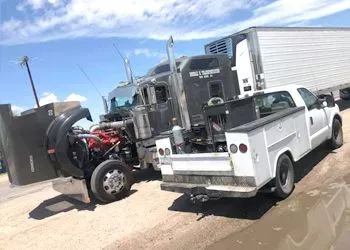
Operating a semi truck in Southern Arizona involves navigating some of the most challenging driving conditions in the country. Extreme ambient temperatures, radiant heat from asphalt surfaces, and pervasive desert dust contribute to accelerated wear on key vehicle systems. Without targeted maintenance strategies, these environmental factors can lead to significant downtime, reduced performance, and costly repairs.
At Tucson Truck Repair & Towing, we know the unique challenges truckers face on Arizona roads. With decades of experience working on heavy-duty vehicles in Tucson, Benson, Willcox, and beyond, we’ve seen firsthand how this climate affects truck performance and how the right semi truck trailer maintenance can make all the difference.
In this guide, we’ll break down the specific ways Arizona’s heat and dust attack your truck, and give you expert-backed tips to keep your wheels turning.
Arizona’s Heat: A Constant Threat to Truck Performance
1. Engine Oil Breakdown
High temperatures cause engine oil to lose viscosity. Thinner oil can’t provide proper lubrication, which increases friction and accelerates wear on internal components. This is especially dangerous when hauling heavy loads across long distances.
Prevention tip: Use high-viscosity synthetic oil rated for high-heat environments. In Southern Arizona, we recommend oil changes every 5,000 miles or sooner, depending on usage.
2. Tire Expansion and Blowouts
Asphalt in Tucson gets extremely hot, transferring that heat directly to your tires. This causes internal pressure to rise and rubber to dry out. If your tires aren’t properly inflated or are already worn, blowouts become much more likely.
Prevention tip: Check tire pressure before and after every haul. Adjust based on ambient temperature and load weight. Always inspect for cracking, worn tread, or sidewall bulges.
3. Battery Drain and Failure
Heat speeds up the chemical reaction inside batteries, shortening their lifespan and increasing the chances of sudden failure. Combine that with desert vibration and dust, and your truck may refuse to start when you need it most.
Prevention tip: Test your battery monthly. Look for corrosion on terminals, loose connections, or slow cranking. Use batteries rated for extreme temperatures and ensure proper ventilation.
4. Cooling System Stress
Your cooling system is your first line of defense against overheating. But in Arizona, even minor issues become big problems fast. Radiator fins clog with dust, coolant evaporates faster, and fans run overtime.
Prevention tip: Use high-quality coolant designed for desert use. Flush the system annually and inspect radiator fins weekly. Check coolant levels before every trip.
Desert Dust Creates Long-Term Risks for Truck Components
Arizona isn’t just hot, it’s dusty. Fine particulates hang in the air and get sucked into your truck’s intake, brakes, suspension, and electrical systems. Over time, they act like sandpaper, grinding away at components and causing unexpected failures.
1. Air Filter Clogging
Dust storms are common in the region, especially during the monsoon season. Your engine’s air filters clog quickly, restricting airflow and reducing fuel efficiency, power, and engine health.
Prevention tip: Check and replace air filters every 1,000–3,000 miles if operating in dusty areas. Consider upgrading to high-efficiency filters rated for desert climates.
2. Fuel System Contamination
Dust that bypasses filters can enter the fuel system, damaging injectors, increasing soot accumulation, and lowering combustion efficiency.
Prevention tip: Use fuel additives designed to stabilize performance in dusty conditions. Have injectors cleaned regularly and inspect the fuel-water separator often.
3. Suspension and Brake Wear
Dust grinds away at rubber bushings, suspension joints, and brake pads. This leads to faster deterioration and compromises safety.
Prevention tip: Schedule regular undercarriage inspections. Keep bushings, mounts, and brake hardware clean and lubricated to reduce dust-related friction.
4. Electrical System Issues
Dust can cause poor grounding, intermittent shorts, or corrosion on electrical connectors. Over time, this leads to warning lights, sensor failures, or “no crank” situations.
Prevention tip: Use dielectric grease on connections and inspect wiring for exposed sections or wear. Tucson Truck Repair & Towing technicians have access to full factory wiring diagrams for all makes and models to diagnose issues fast.
The Cost of Ignoring Climate Maintenance
Neglecting maintenance tailored to Arizona’s harsh climate can significantly reduce your truck’s longevity, leading to costly repairs, unexpected downtime, and serious safety risks. That’s why drivers from Phoenix, Nogales, Indio, CA, and El Paso count on us to handle complex issues others can’t. From DEF systems to full clutch jobs, we deliver dealership-level service without the long wait times or inflated prices.
The Tucson Truck Repair & Towing Difference
We don’t work on pickups or do oil changes. Why? Because our techs are specialists. Each of our 35 technicians specializes in one or two complex truck systems, ranging from heavy-line engine rebuilds to electrical and aftertreatment systems. We don’t just guess—we diagnose. Using advanced factory-grade tools, we pinpoint issues quickly and efficiently. We stock the right parts, work efficiently, and offer:
- 24/7 mobile roadside repair for safe locations
- Full-service in-shop repairs for major jobs
- Heavy-duty towing (35-ton wrecker, 50-ton rotator) across Arizona and neighboring states
- Same-day clutch and differential jobs when possible
Essential Maintenance Checklist for Arizona Trucking
To keep your truck in top shape across the Southwest, use this desert-ready checklist:
- Oil & Filters: Change every 5,000 miles
- Tires: Inspect and adjust pressure daily
- Batteries: Test monthly and replace as needed
- Coolant System: Use desert-grade coolant; flush annually
- Air Filters: Replace every 1,000–3,000 miles in dust season
- Suspension & Brakes: Inspect every 15,000 miles or after rough terrain hauls
- Electrical Systems: Check grounds, connectors, and exposed wiring every 90 days
Don’t Let Heat or Dust Sideline Your Rig
In Arizona’s extreme conditions, truck maintenance goes beyond routine care; it’s essential for staying safe and avoiding costly, inconvenient breakdowns. The harsh desert environment makes every mile a challenge, which is why drivers from Tucson to Benson, Marana, and beyond rely on Tucson Truck Repair & Towing.
As specialists in heavy-duty truck repair, we’re equipped with the tools, experience, and precision to get your rig back on the road quickly and done right the first time.
Don’t wait for problems to leave you stranded; call us at 520-665-9550 to schedule your service.